Growing Veg and Making Smoothies (aka ways I’m getting my fruit and veg as an autistic adult)

As an autistic person, I sometimes have issues eating certain foods. Things that are unpredictable, with varying unexpected textures and flavours are especially hard. So basically, most fruit and vegetables. Why is it so hard to eat healthy!

I know I don’t eat enough fruit and veg. I would happily live on instant noodles, buttered bread, and fried eggs for eternity. The trick is figuring to make things in a way that is appetizing to me.

One way is growing my own veg. I love gardening (when my body tolerates it) and honestly my veggies taste SO MUCH better then store bought. I read in a book once that home grown vegetables can both taste better and have more nutrients than store bought (I got to check my library reading history and find that book again). Win win! My carrots, grown with my own compost, are delightful. They have a much milder and tolerable flavour. I’ll even eat them uncooked with hummus. This way I’m not at the mercy of the store-bought salad bags. I can go out and pick the most appealing leaves of lettuce (not stemmy, must be leafy).

Another thing that is helpful, is if I can blend everything together. If everything is the same texture and taste, I’ll be more likely to eat it. Right now, my daily routine is to make a smoothie with 1 banana, a handful of frozen strawberries, vanilla extract, and a bit of soy milk (I have a dairy allergy). I blend it really good. No lumps. If I have lots of energy, I might add an orange. But I do prefer it pretty plain. I also like that it’s on the warmer side? It’s not too thick and cold as to hurt my sensitive teeth.
I guess the blending things up could be taken further too. While I haven’t made them myself yet, I know prefer soup that is blended, not chunky. I think I should try some more food experimenting. Who knows, maybe I’ll make or link some of my favorite recipes here.

Aquarium Therapy

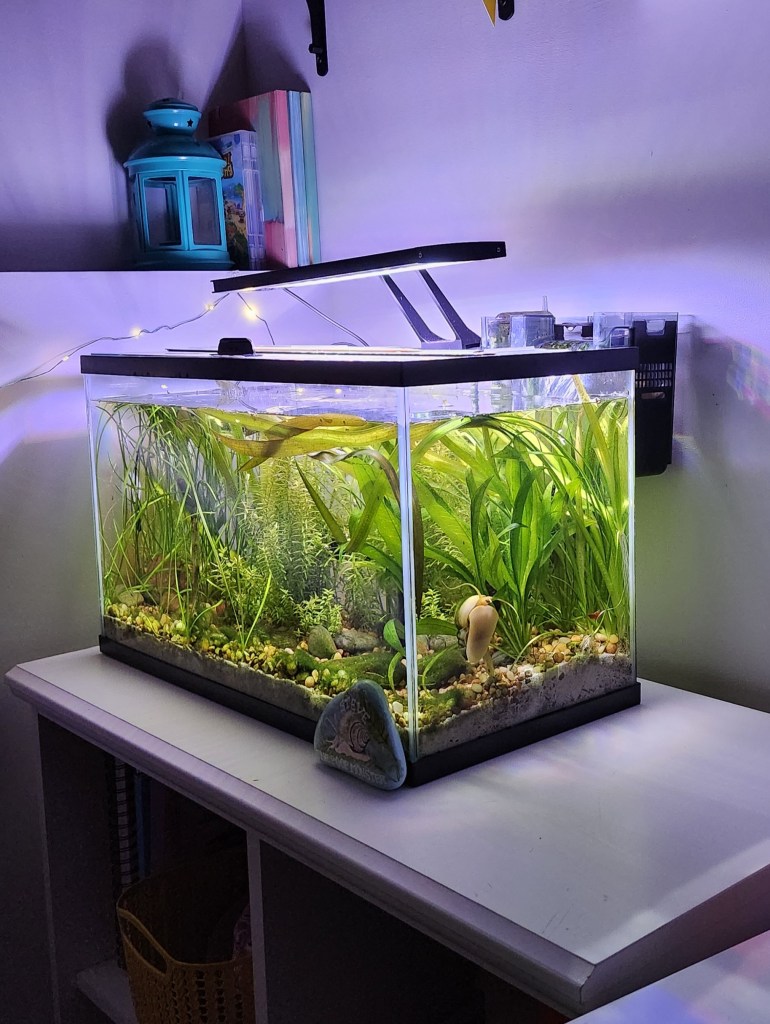
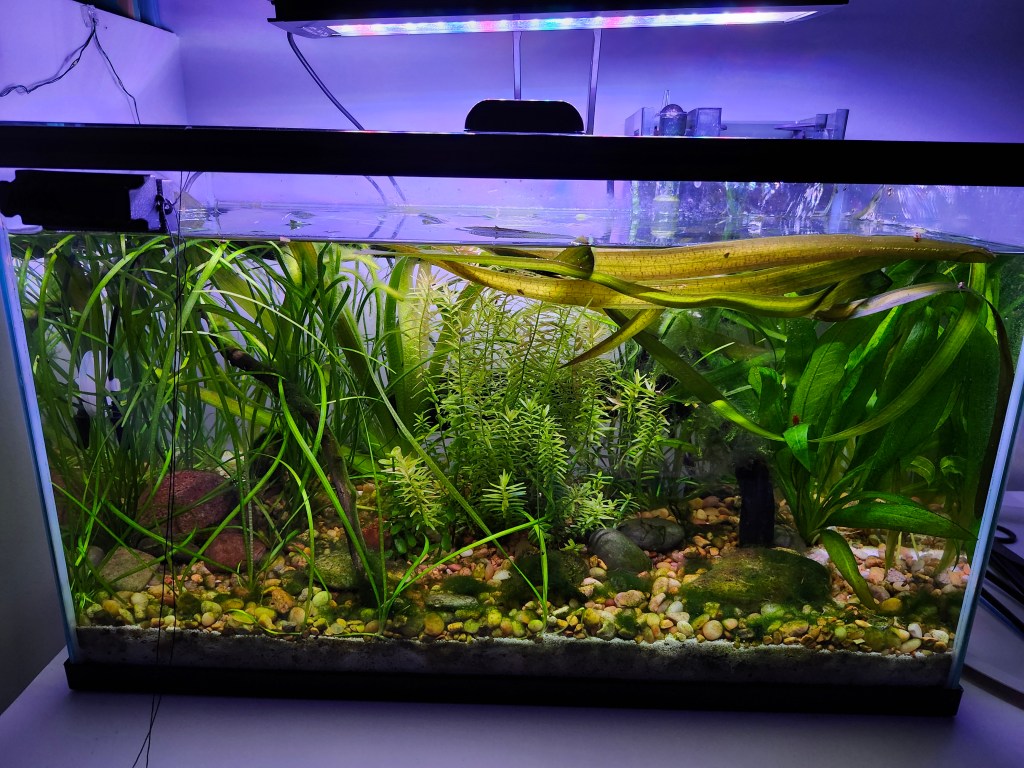
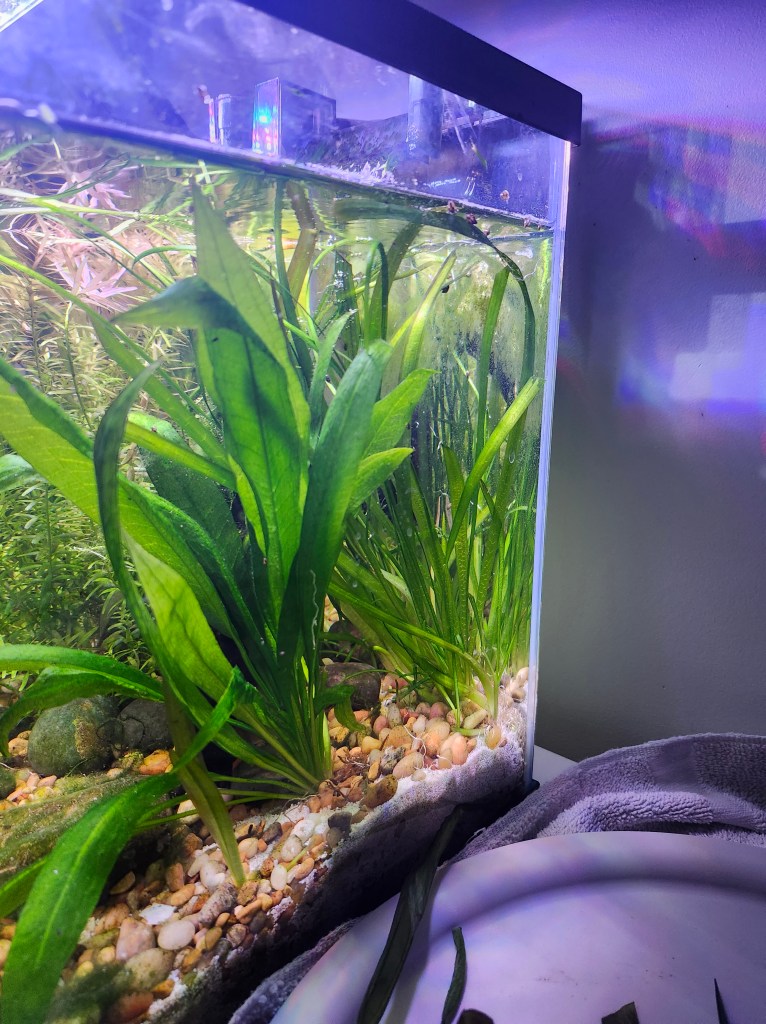
I’ve always loved nature and her critters (well, most of them anyway). A developing interest of mine over the past few years is natural style aquariums. I came across the Walstad method and started a planted vase, which quickly turned into a 10 gallon tank.

My little glass box utterly fascinates me.

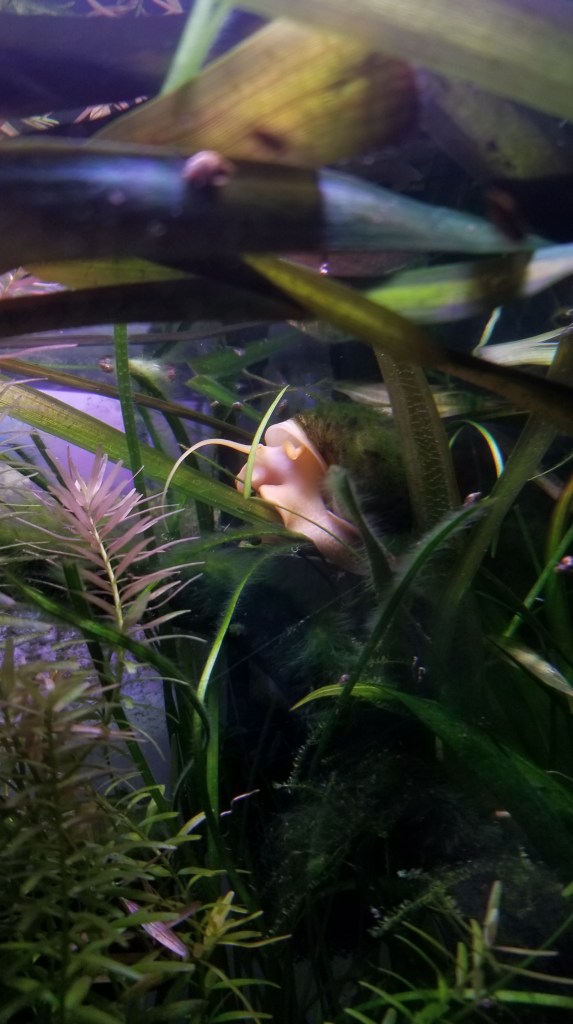
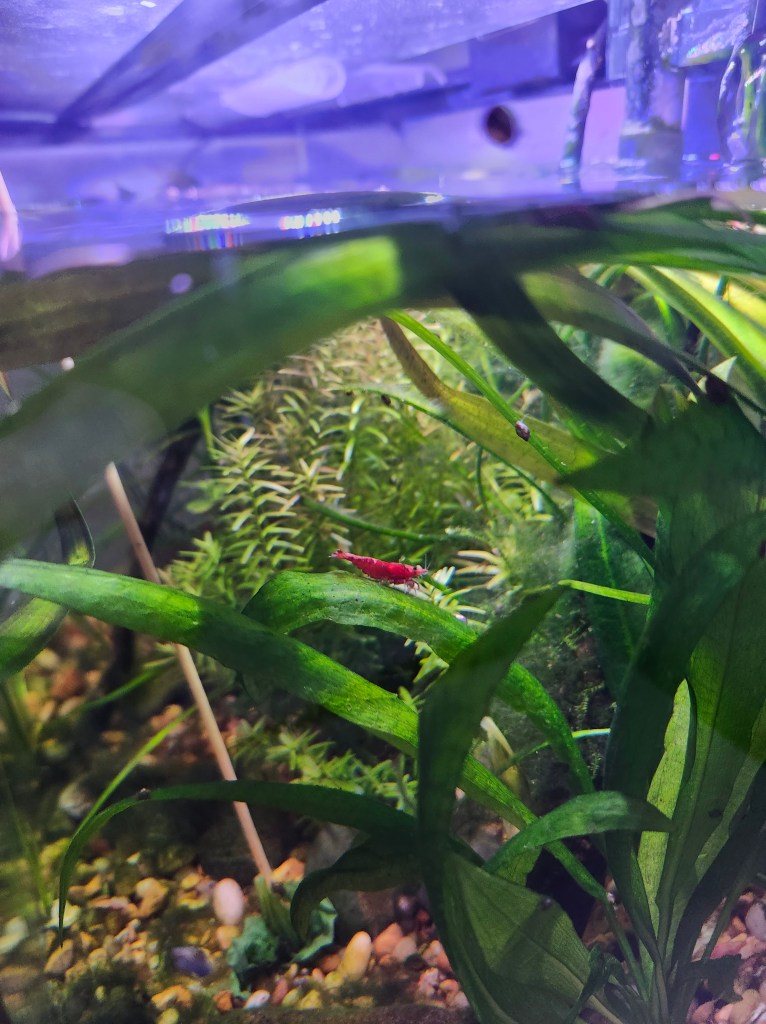
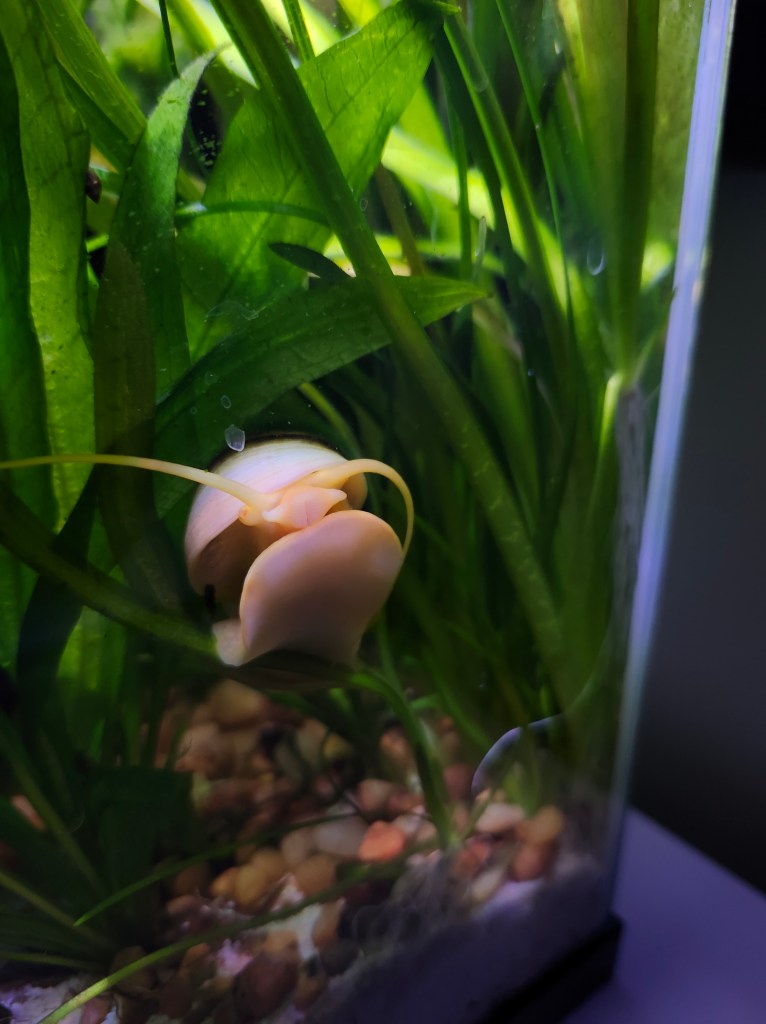
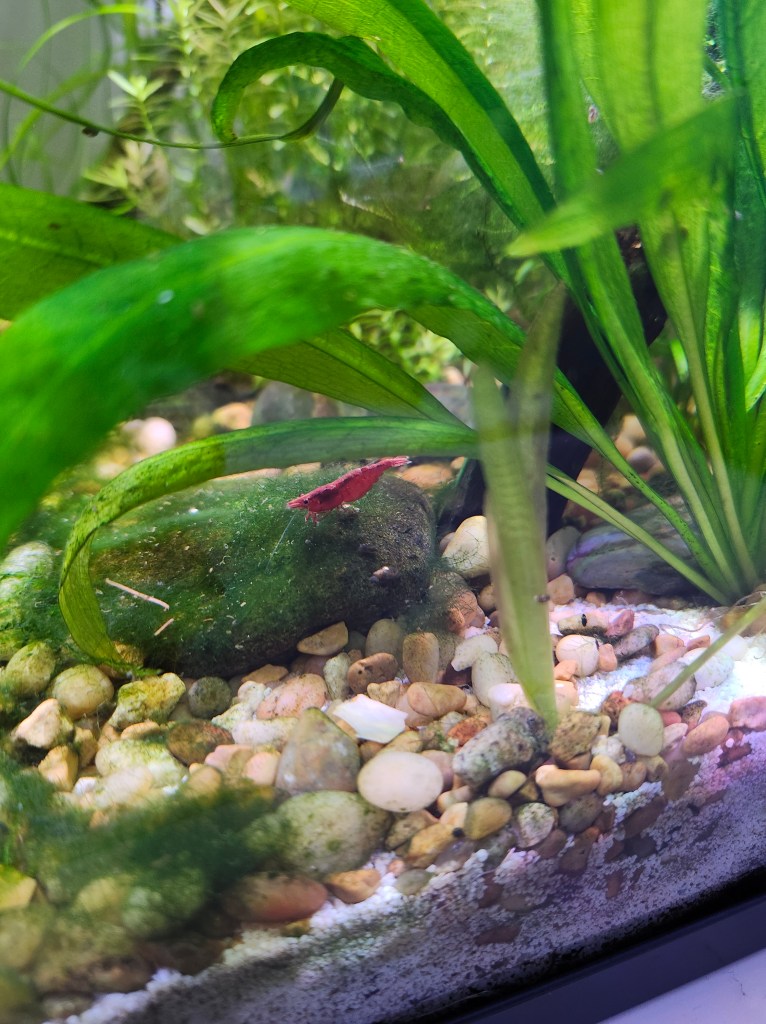
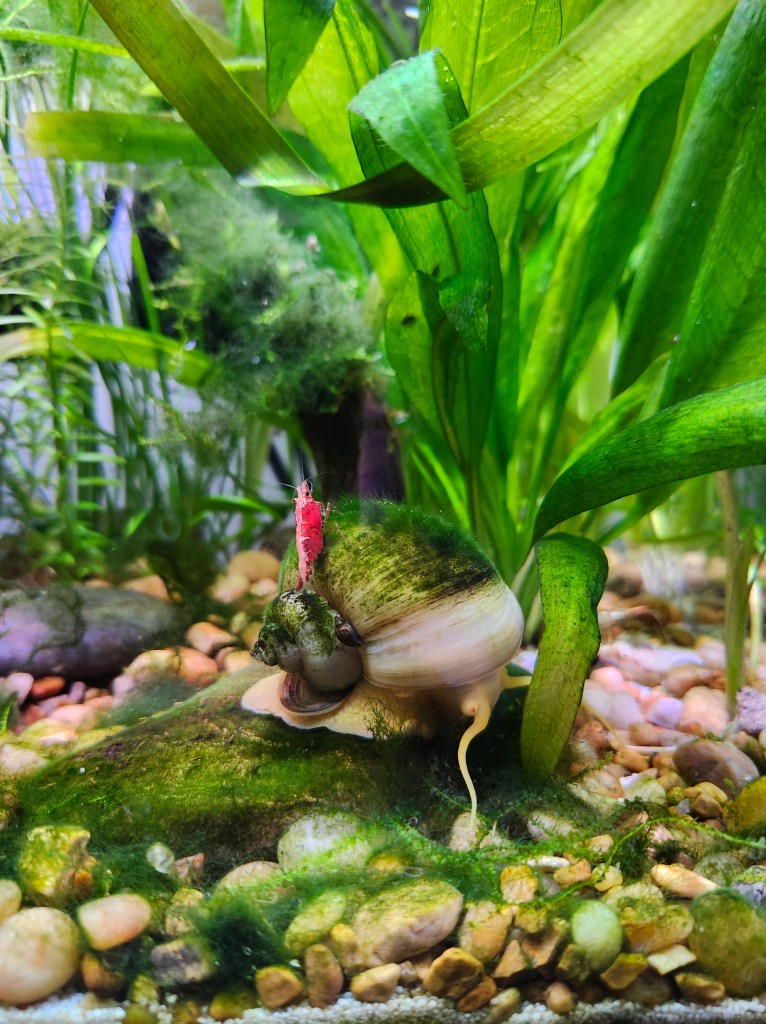
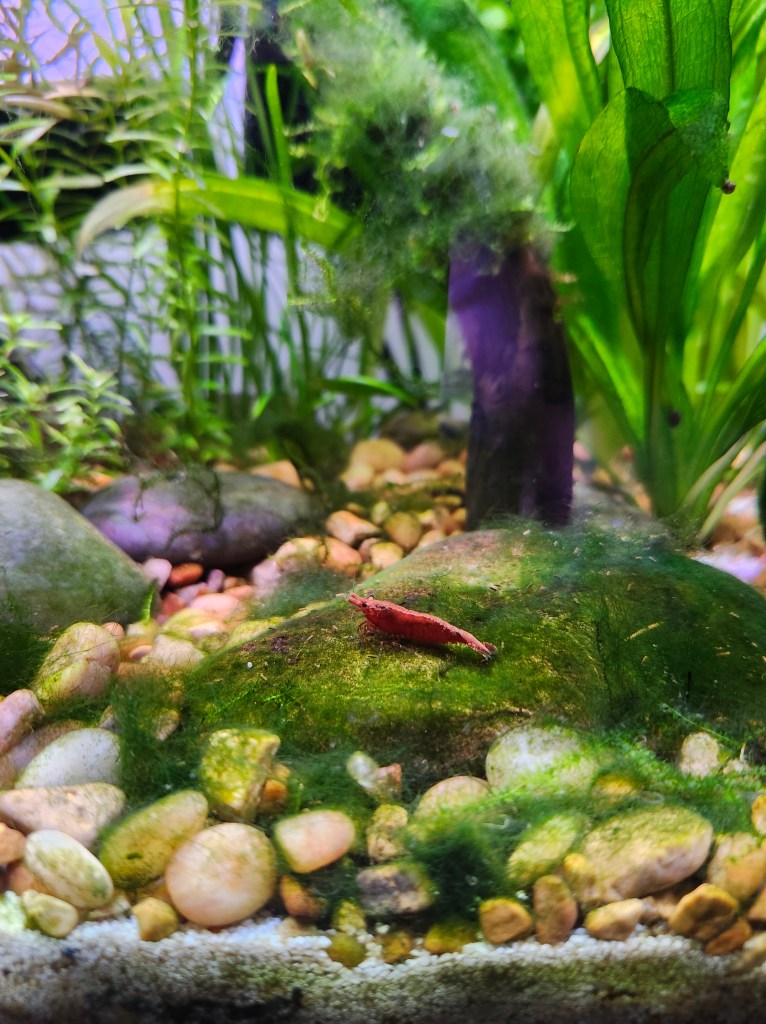
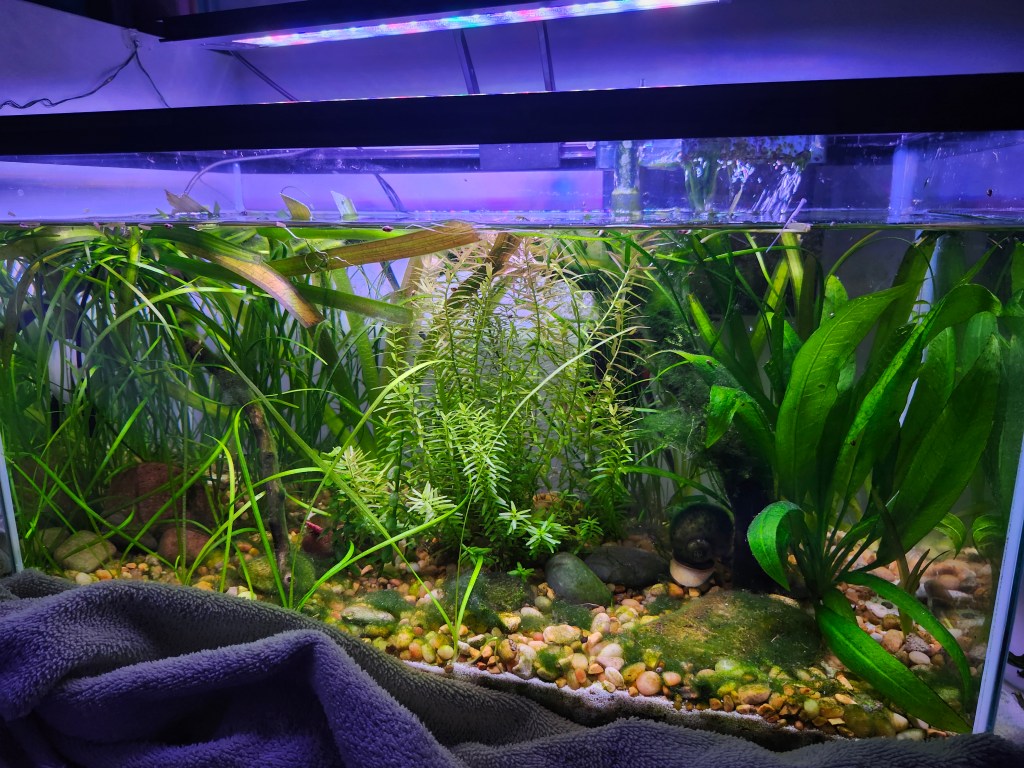
I have lots of plants, a mystery snail, and some shrimp. I keep it in my bedroom and found a silent HOB filter, so the sound doesn’t bother me. Though having next to my next to my desk is not the most productive thing; I can easily sit and stare at it for an hour.

Something is always moving. My snail leaping from the highest point he can find, the shrimp, well, shrimping. The plants sway in the gentle flow and green fluffy algae ripples with the current. If you look closer there are microorganisms, bundles of bladder snail eggs, and detritus worms keeping things clean.

It’s something that is truly alive where I can sit and watch nature doing its thing. Unfortunately, that also means watching Steve (the mystery snail) eat his smaller cousins. Ah, the circle of life. It scratches an itch I can’t explain (not the cannibalism, the other stuff).

It reminds me of a passage from the book Divergent Mind: Thriving in a World That Wasn’t Designed for You by Jenara Nerenberg.

In it, she interviews author Ingrid Fetell Lee, who says: “If you think about nature as the baseline for what our senses are good at processing, nature isn’t silent, quiet or still – nature is always moving – and yet it’s the most calming setting we have access to.”[i]

She also says: “I think we mistake something that’s calming for something that’s less stimulating, when in fact I think a lot of our environments are understimulating”.

My think my autistic brain especially appreciates the visual stimulation, combined with the art of designing a tank, and pouring my love into the critters I take care of. I think one day I’m definitely going to become one of those people with a shelf of shrimp tanks sorted by colour.


[i] Jenara Nerenberg, Divergent Mind: Thriving in a World That Wasn’t Designed for You, First Harpercollins paperback edition (HarperOne, 2021).

Screen Time Escapism

Escapism

“Habitual diversion of the mind to purely imaginative activity or entertainment as an escape from reality or routine.”

Merriam-Webster Dictionary

I can often identify if my neurodivergent self is stressed out by the sheer amount of screen time I’m consuming.

I’m a late diagnosed autistic. I’m still learning how to identify what I’m feeling and notice said feelings before they hit a 7. It’s hard to regulate your stress if you aren’t totally aware of it in the first place. Recently I’ve started to notice the pattern; stress leads to more screen time; excess screen time leads to more stress.

This blog post is about my personal experiences and is not professional medical or mental health advice.

As a child, my escapism was my imagination; daydreaming up stories and acting them out. Later it was devouring books instead of doing schoolwork (algebra could wait, I needed to know how Harry Potter and the Prisoner of Azkaban ended). When I acquired my own laptop and near unlimited screen time as a late teen, I binge watched YouTube until 3 am. Now I binge and rewatch my comfort shows, sometimes all day. While I don’t think there anything wrong with finding comfort from these things, it has become a bit of a problem.

Mainly the frequency is interfering with day-to-day life. It’s hard to do things (like writing this blog post) while my brain is craving the next episode of a show. To watch it right now would feel so good; but I’ve already watched an entire season today.

It’s also a short term escape from stress and just delays what what needs to be delt with. The moment I turn off my tablet the feeling of numbing bliss turns to wanting more, all while being stared at by a growing to-do list. Plus, it doesn’t just put off doing important things to the last minute, it sucks up time better spent on my interests.

If binge watching was a full-time job, I would be set for life.

But why do I need escapism at all? From sensory sensitivities, forcing eye contact, to fears of contamination and random death, life has been inherently uncomfortable and confusing for me. But now that I’m aware of it, I have a chance to change and adapt to my needs instead of cramming myself into box.

I would love to know what your early signs of stress are and what (hopefully healthier) strategies for relief you use.

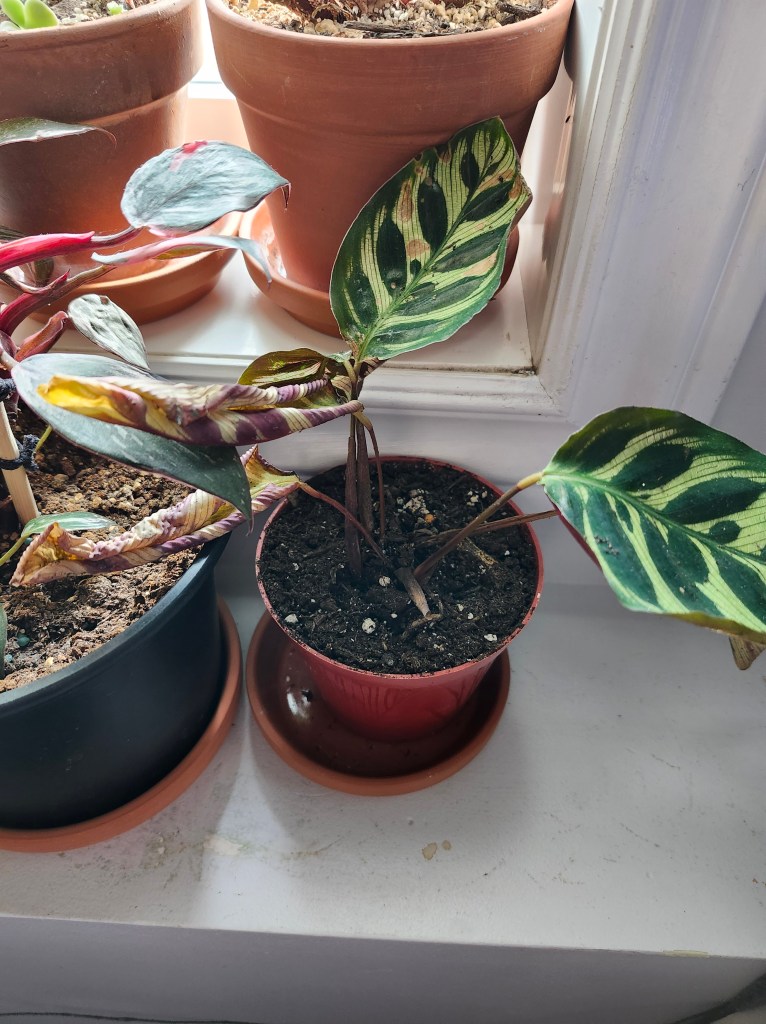
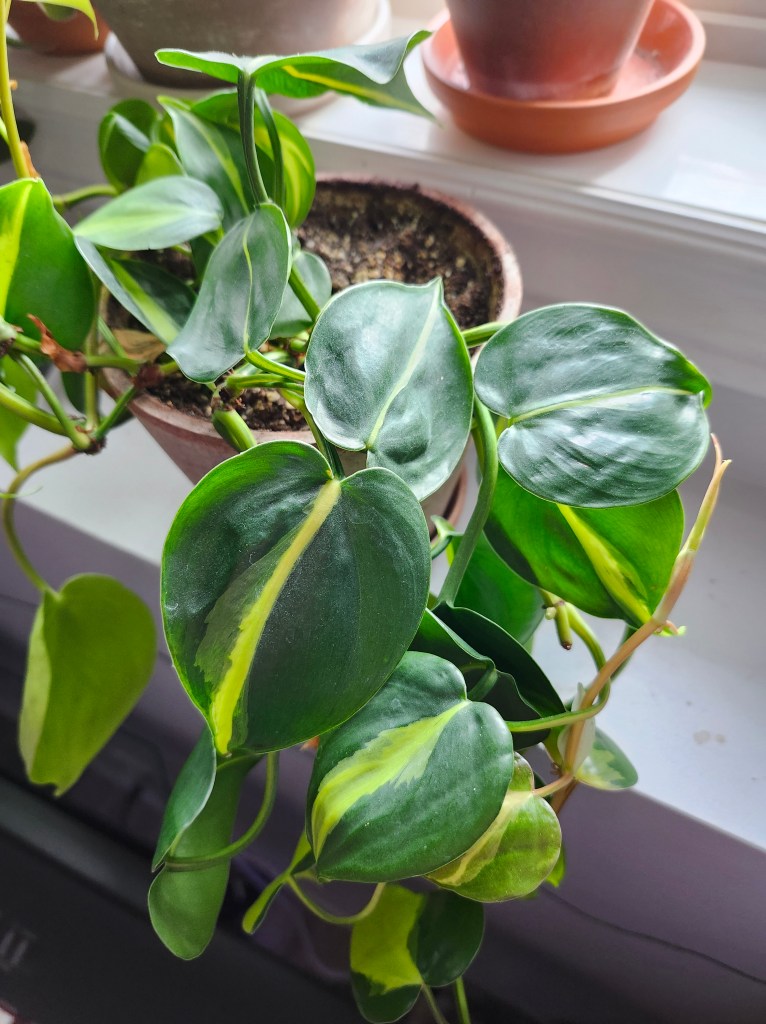
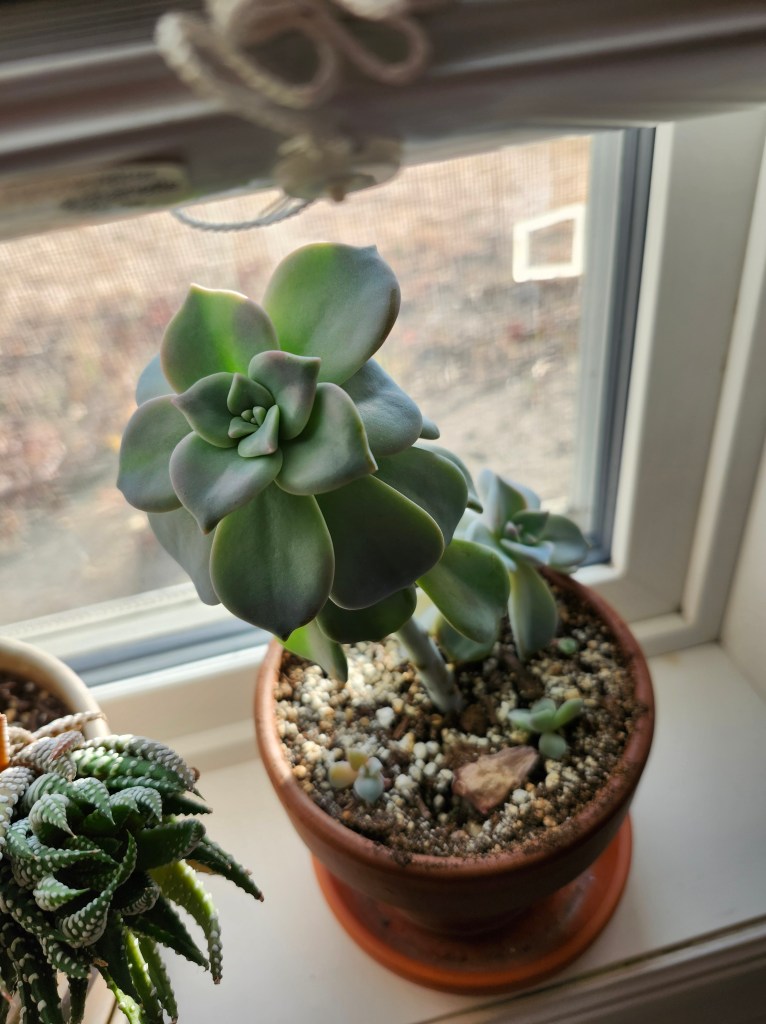
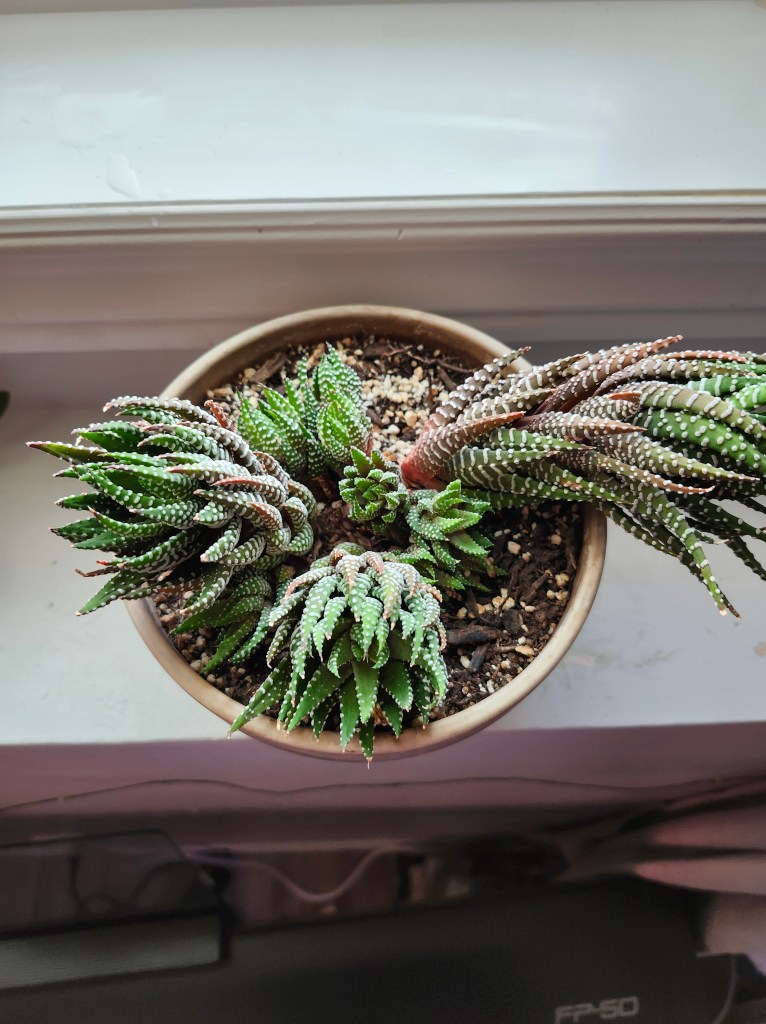
Houseplant Collection Reset

I’ve been pretty busy, or at least my recovering-from-autistic-burnout brain thinks I have.

Which has meant a slump of low motivation, passion, and energy. Unfortunately that means my houseplant collection has been rather neglected. I kept saying “I’ll do it tomorrow”; tomorrow turned into a month.

I tend to get stuck, thinking I have to do everything at once which leaves me with a sore back and an overwhelming mess. (An example of my autistic black and white thinking perhaps?)

This time, I’m going to take it slow and try not to create a mess tornado in my bedroom and bathroom.

Day 1

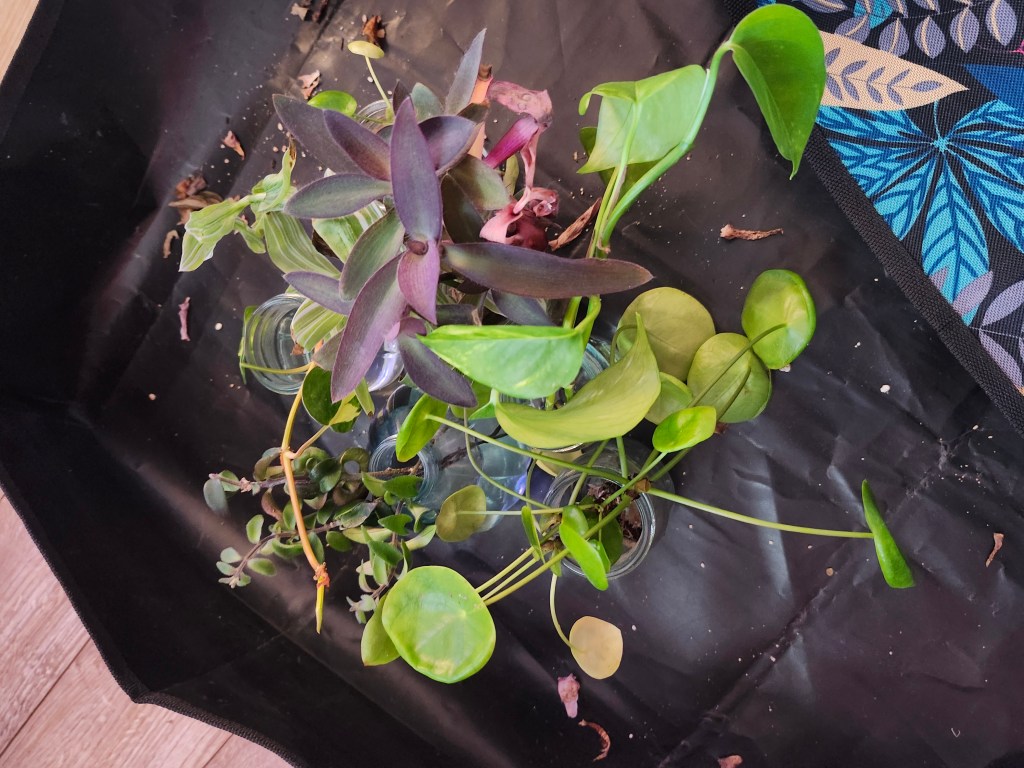
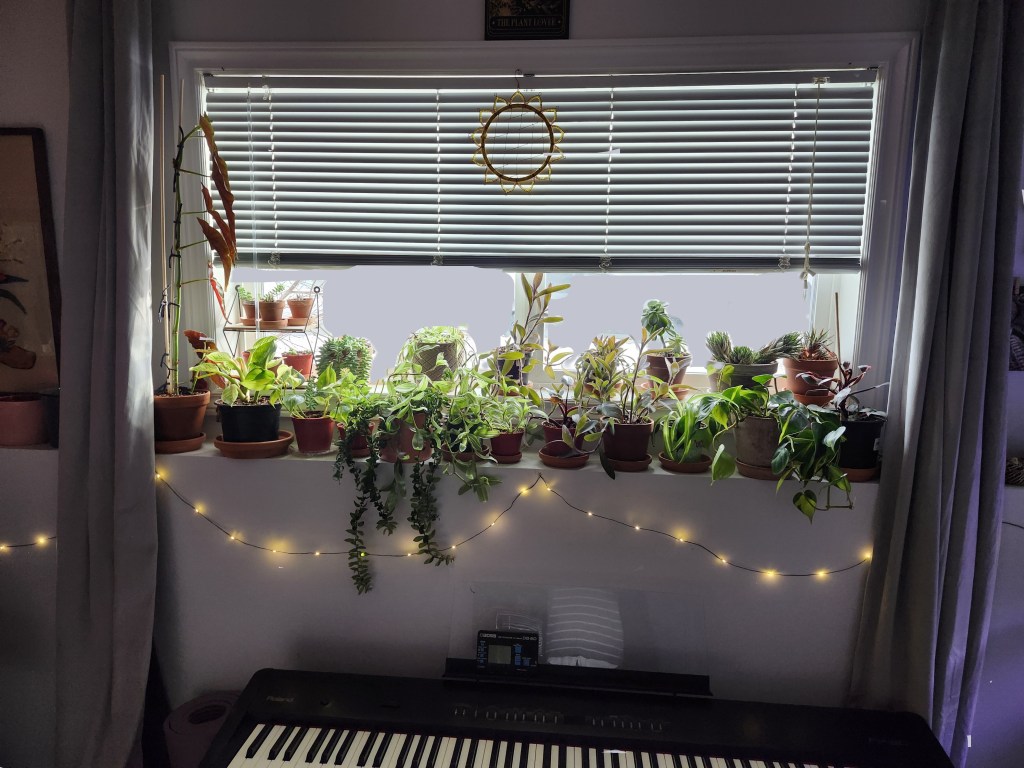
First, everything needs to be watered. I also need to deal with the spider mites and thrips that have made themselves at home on my stressed plants.

I started by taking 3 plants at a time to the bathroom, drowning them in the sink, then spraying them with diluted rubbing alcohol in the shower. I left them there for about 30 minutes while I did other tasks or took a break. I picked one side of my window and slowly worked my way over.

Today I threw out 2 plants (I had healthier duplicates) and watered and sprayed 12 others.

Day 2

Now that I’m thinking of it, I should be using a box to carry the plants to the bathroom in groups; less work.

I watered and sprayed 24 plants today (I have more in another room)

I also took down my hanging plants, while they look amazing it’s harder to take care of them up there.

Day 3

After watering and spraying my last 3 plants (for a total of 39), I started pruning.

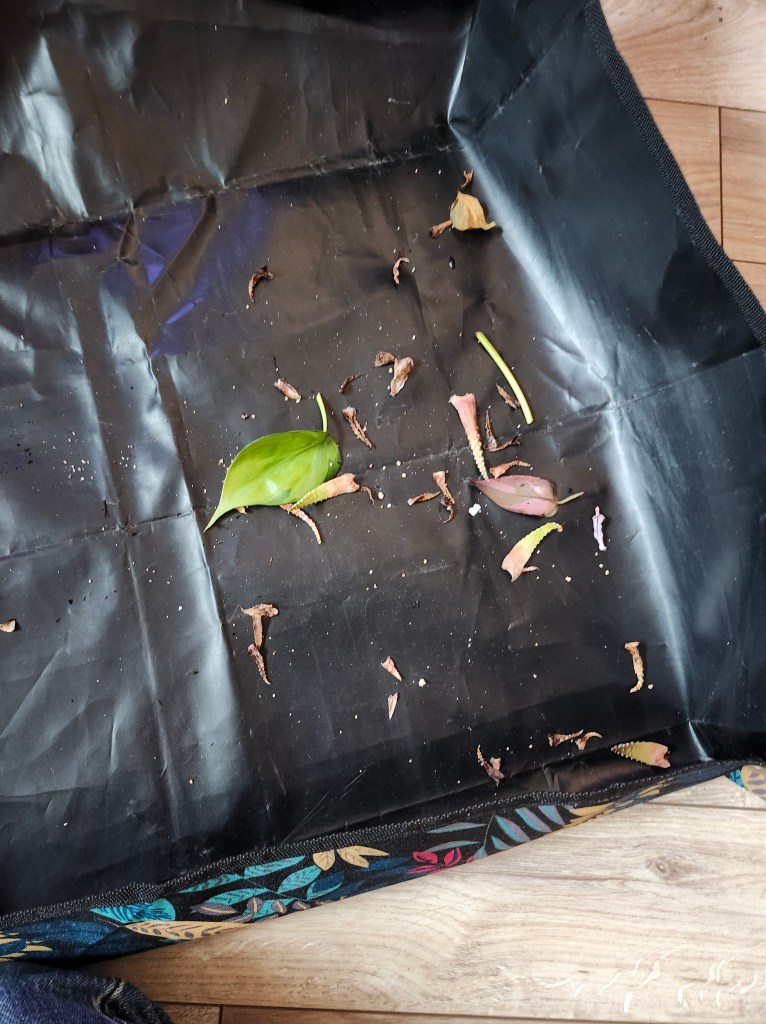
I focused on removing damaged leaves to help remove thrip larvae.

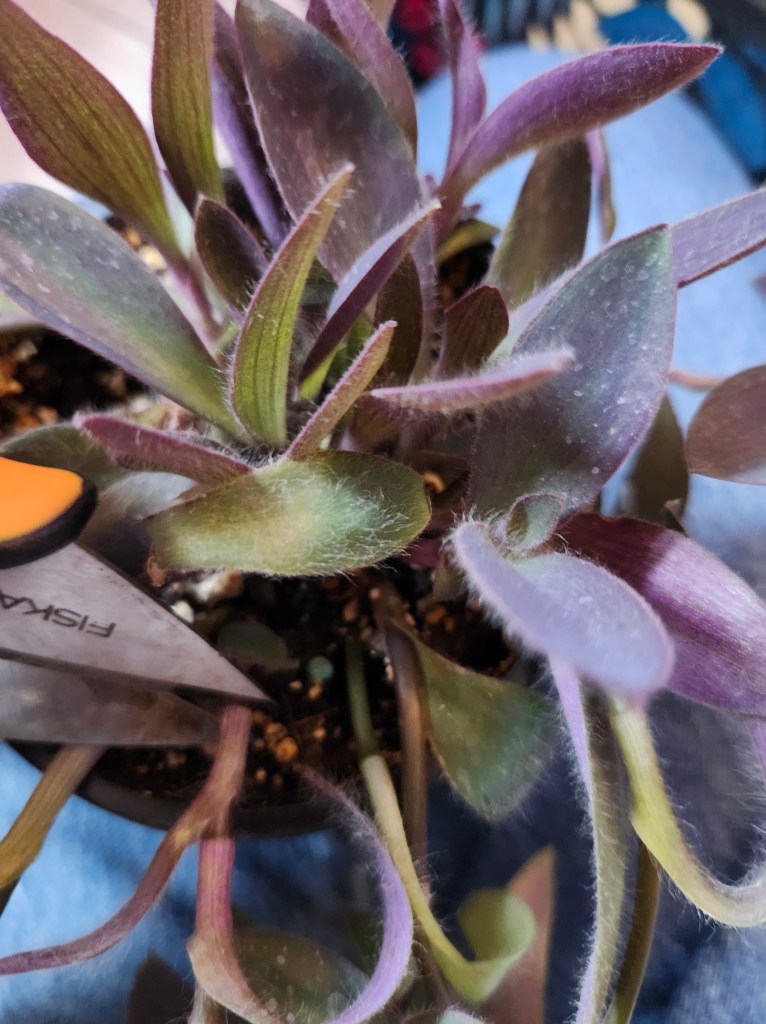
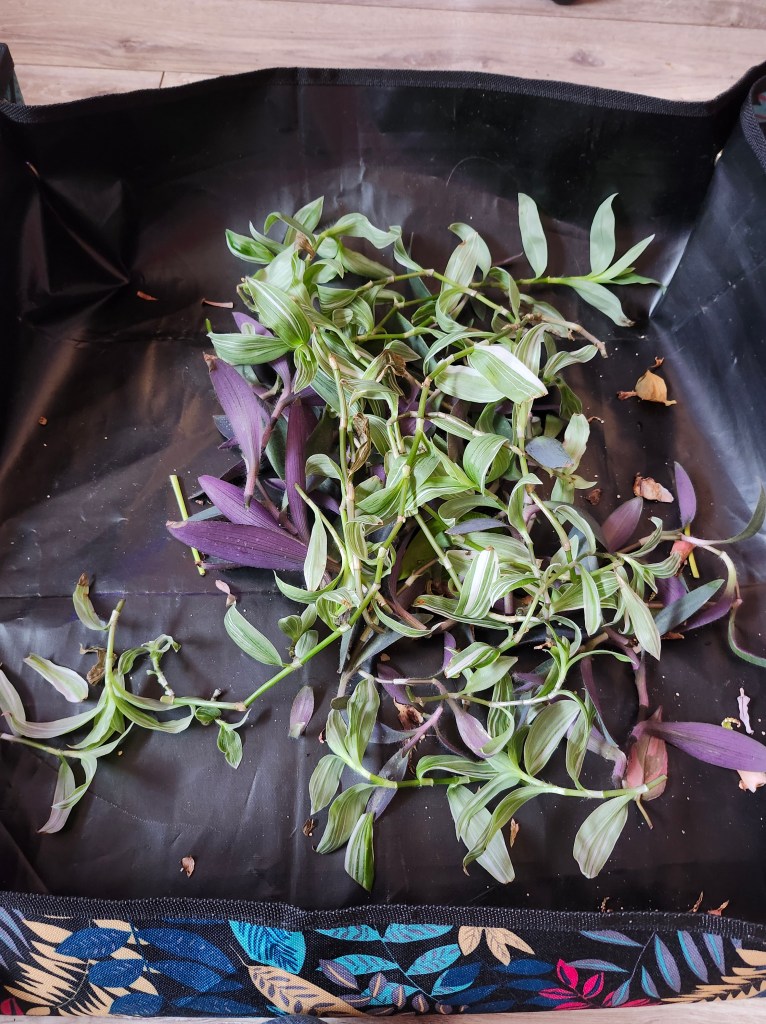
The tradescantia plants needed a hard prune to keep them bushy.

I pruned 25 plants.

Day 4

I bought some fertilizer, epiphyte fertilizer, yellow sticky fly traps, and a new air plant to replace one that died (Tillandsia capittata peach)

Day 5

I’ve never fertilized my air plants beyond soaking them in my aquarium. I grabbed an empty 4 liter bottle, labeled it, and mixed the fertilizer in it. I soaked the air plants and put the leftovers in my watering can for later.

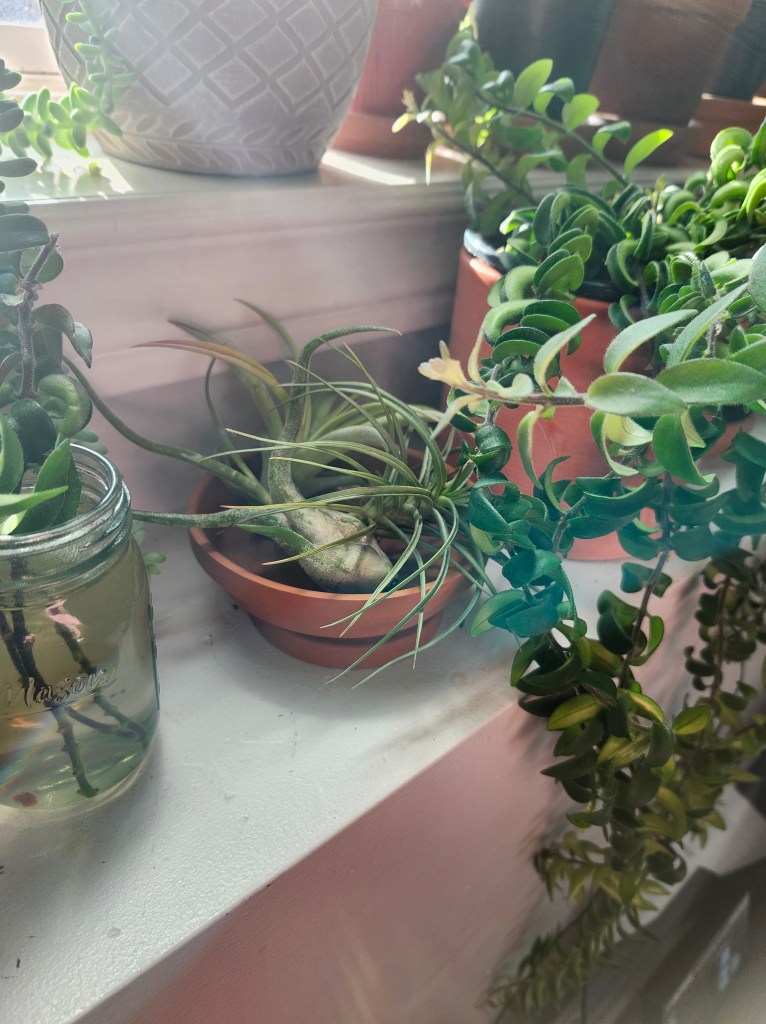
I was trying to make an air plant wreath, but I kept forgetting it existed. So now I’m keeping them in a tray in my window.

Day 6

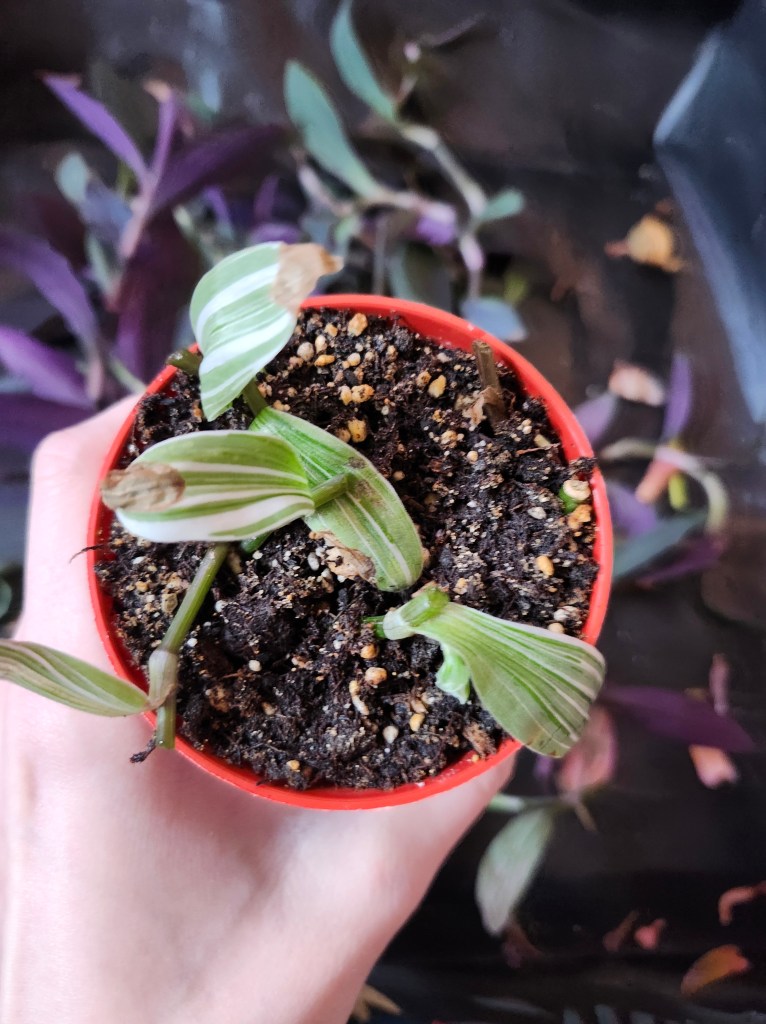
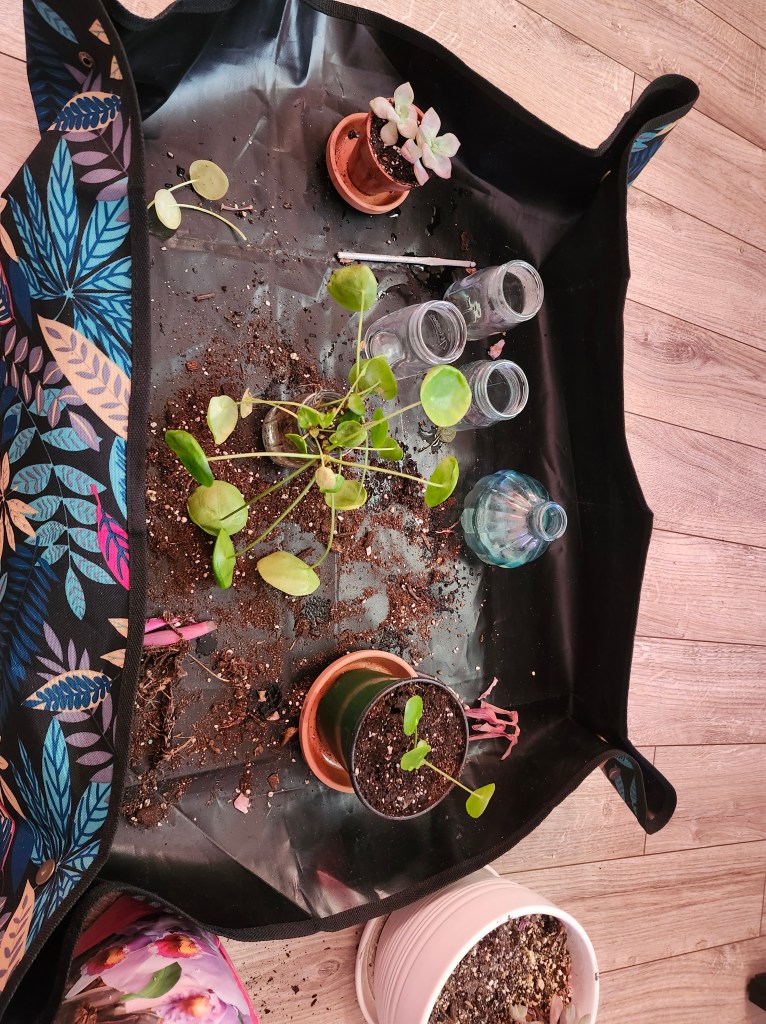
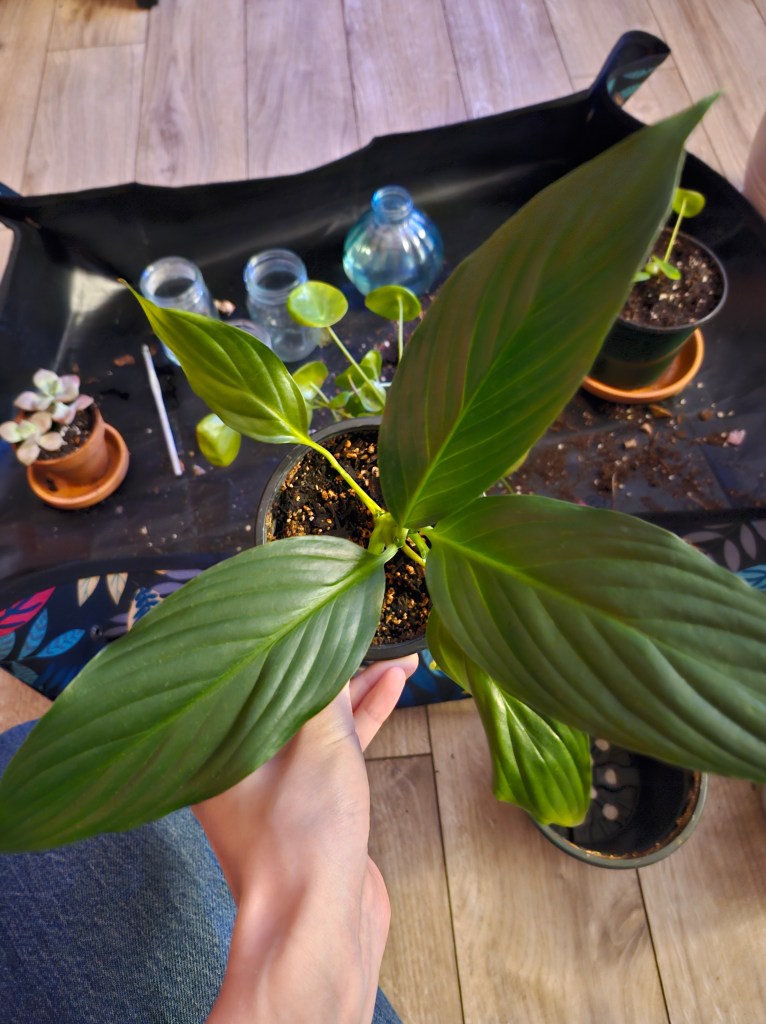
Lastly I have some cuttings to pot up. Most are being put back into the mother plant pots, but a couple are for making new plants. I also topped up a couple pots low on soil. I used a crochet hook to poke the cuttings in.

My plant window now looks really nice and satisfying and I’m getting that itch to buy more plant things again…

Notes to self:

  1. Use a container, box, or tray to move plants in groups
  2. You don’t have to do everything at once!
  3. You can never have enough plants

September 2025 Aquarium Diary

I didn’t get much done this month besides keeping everyone alive and happy. But I have some ideas for arranging the plants and equipment.

I decided to cut back the jungle Vallisneria in the corner and put my heater there vertically. That way the sword plant won’t have as much competition and I can move some plants to behind the rotala.

I’m going to start looking at ordering some foreground plants online and maybe some more shrimp. I think the shrimp that survived the transition to my aquarium are all male.

Executive Dysfunction: Cleaning Tips That Don’t Work For Me And Why

I’m a late-diagnosed Autistic adult and I’ve always had a difficult time keeping my space tidy. Which is ironic, because I need a clean, organised space in order to focus.

I’ve tried a lot of general advice and different systems, but they’ve never really stuck. But since getting my diagnosis, I’ve been learning how my unique brain functions and how to work with it.

My main difficulty with cleaning is likely from my difficulties with executive function:

 The group of complex mental processes and cognitive abilities (such as working memory, impulse inhibition, and reasoning) that control the skills (such as organizing tasks, remembering details, managing time, and solving problems) required for goal-directed behavior

“Executive function.” Merriam-Webster.com Dictionary, Merriam-Webster, https://www.merriam-webster.com/dictionary/executive%20function. Accessed 14 Sep. 2025.

It’s not uncommon to have difficulties with executive function (aka executive dysfunction) as an Autistic person.

One way to think of it is that the skills I use to keep organised and focused don’t work in the “normal” or “typical” way. Before knowing this, I’d try to make what appeared to work for everyone else (aka neurotypicals) for me work. Which always ended in frustration, and honestly still does, because I was trying to force myself to fit into a system that was not created for my brain.

“Just clean up as you go!”

I simply do not have the awareness of my actions to do this.

I’ve tried this many times, usually as a New Years resolution, and ended tired and stressed out. Doing this uses up SO MUCH mental energy. I have to stay aware of what I’m doing, while making tons of small decisions. It can also involve frequently switching between tasks, which can be irritating for me.

Create a strict routine stick with it.

I have lots of reasons why I’m unable to keep up with a stricter routine; chronic illness, burnout, scheduling etc. Plus I’m very good at forgetting to clean, via being focused on something else. I always end up falling behind then feeling bad about.

I also trend towards black and white; all or nothing thinking. If I can’t do it perfectly, why do it at all?

So what does work?

Fortunately the more I figure out what doesn’t work, the closer I become to finding out what does. I’m someone who really learns well by doing.

I know now when I set up cleaning routines, I need to be flexible. I need to do what I can with what I have (energy, executive function that day etc.). I don’t do well with strict set times, but looser ones can work. I do better batching my tasks and I try to do a small room reset in the evening as part of my winding down routine.

Done is better than perfect and doing something, anything is better than nothing.

Aquarium Diary: August 2025

It’s now September and the aquarium is doing well! Steve the mystery snail had a rapid growth spurt, likely from the heat wave we’ve been experiencing. I haven’t seen Bob the bladder snail in a long time; I believe he has passed. Though Bob’s hundreds of children, the Bobettes, live on to carry his legacy. The shrimp are seemingly happy, mindlessly munching away on algae, veg, and bug bites. They have all successfully molted multiple times which is encouraging.

This month I did light maintenance. I didn’t add liquid plant fertilizer, root tabs, and kept the water changes to a minimum, to let the shrimps adjust in peace. Since my aquarium has a large amount of filtration (bacterial, mechanical, plants) I only do a small water change about once a month. I spot cleaned occasionally with a turkey baster covered in a net (so I don’t alien abduct the Bobettes). I also cleaned up some hair algae with my hand (it’s easiest to roll it into a roll to take it out) and scrubbed the glass with a magnetic scrubber.

I do want to start working on the aquascaping part of my tank. I gave the plants 2 big chops this month. Well, mostly I trimmed the Jungle Vallisneria. While I love these plants, the 5 foot leaves are a bit much for my 10 gallon setup. I’ll think I’ll just keep one around and sell the rest for now.

I think I’m getting the hang of using my camera (Canon Powershot G16), some of my photos are actually in focus!

Tiny Tweaks #3: Removing Clothing Tags

I’m an Autistic adult and this is a small thing that makes my life just a little bit better.

I have some sensory sensitivities around clothes. Some are constant, and some come and go depending on my capacity that day. A constant one that bothers me is clothing tags. I just can’t stand something lightly touching me on my back of my neck.

Fortunately it’s an easy fix. I use a stitch ripper, a tiny pair of scissors with a sharp point, and tweezers to take them off as needed.

If a piece of clothing has specific instructions I need to follow, I just take a photo of the tag and put it in a folder on my phone.

This sensitivity is one I’ve always noticed, I just didn’t do anything about it. I think it’s because I wanted to fit in, and everyone else seemed to tolerate tags just fine.

Plus it just felt wrong to cut the tags off. Or when I did, bits were left behind and felt even worse (hence the tweezers! You can get all the bits!).